

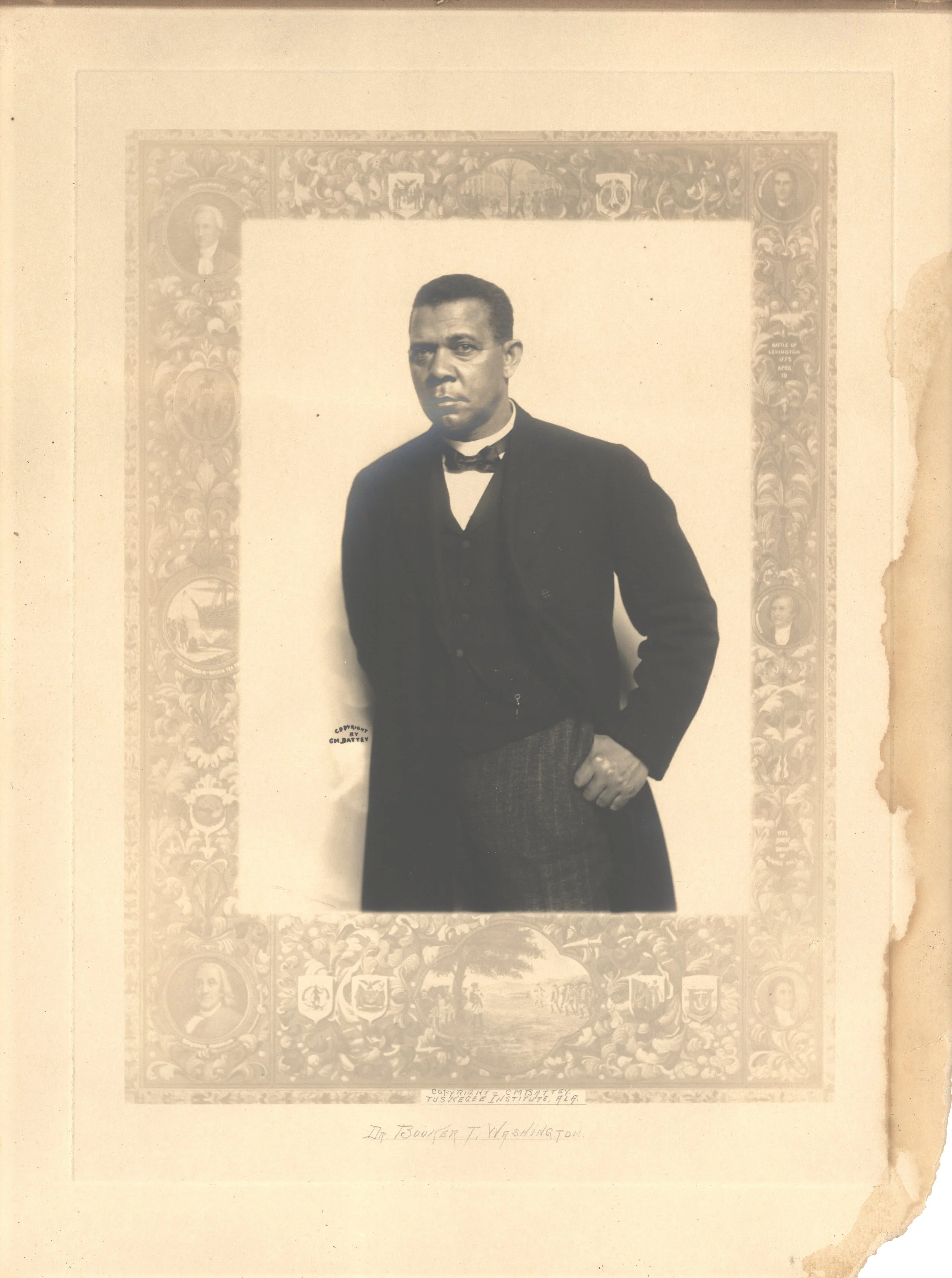
Before the well-known Harlem Renaissance, Booker T. Washington played a central role in creating America’s first Black Arts Movement (the New Negro Movement). Washington, principal of Alabama’s Tuskegee Normal and Industrial Institute (now University) inspired and supported a generation of artists who translated John Ruskin’s philosophical connections between nature, art, the dignity of labor, education through experience, and Christian morality to visualize aspirations of racial uplift through self-representation to combat virulent Jim Crow repression. On the Tuskegee campus, the most salient example of an artist’s adaptations of Ruskin ideas through Washington’s support appears in the photographs of C.M. Battey, founder of the first photography department on an HBCU campus, and a key transitional figure to the Harlem Renaissance.
Michael Bieze has a BFA in Drawing from Arizona State University, a MA in art history from the University of Washington, and a Ph.D. in Educational Policy Studies from Georgia State University. A student of Tony Gully at ASU, who organized the exhibition Ruskin and the Victorian Eye (1993), Bieze first learned about Ruskin while working with Gully at the College Board. Bieze’s publications include two books on Booker T. Washington, and many articles including Ruskin in the Black Belt (Source: Notes in the History of Art, 2005).